Posts

My Writing Efforts in May

Image
In May I started behaving more like a writer, even though I am still very tired. I wrote a lot more and I started critiquing again. I put this down to quitting Facebook six weeks ago. I really missed Facebook to begin with, but not so much anymore. I gave myself permission a few days ago to go back on Facebook, but I still haven’t ventured onto it, though I might to plug this blog post. I decided that I will only go on Facebook after I have written at least 500 words of fiction – or edited for 2-3 hours -- and done whatever critiquing activities I had scheduled for that day. Novel Writing. In May, I wrote 13,525 words of my novel Branded, more than doubling my monthly totals for this year. I reached my daily quota of 500 words on 18 days with 1020 words as my best daily total. So I averaged 436 words a day. I have written approximately 87,000 words of the novel. I had hoped that the first draft would be around 90,000 words, but my characters decided not to cooperate wi...
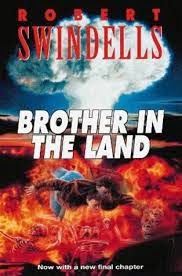
Review of Brother in the Land

Image
Brother in The Land begins with teenager Danny taking a break from working in his father’s corner store to go on a long bike ride into the English countryside. It starts to rain, so he takes shelter in a World War II pillbox. As he waits for the rain to stop, he sees the flashes of nuclear missiles exploding. Aware that the rain might contain radiation, he waits for it to stop and then rides back to his fictional hometown of Skipley. It is badly damaged and hundreds are dead. The rest of the novel tells the story of Danny’s attempts to survive. Brother in the Land is a young adult novel told exclusively from Danny’s point of view. Danny seems slightly emotionally detached from what is going on around him. He mourns little for family and friends who died, which leaves the reader wondering if he had had any friends. But perhaps he is just in shock and too busy getting on with surviving to mourn. The novel does a realistic job of describing the aftermath of a nuclear attac...

My Writing (meltdown) in April.

Image
I had a writing meltdown in April. I was, and still am, frustrated with the lack of output and progress with my fiction writing. Strangely, the meltdown was caused by my non-fiction writing after I submitted an article to Divine in mid-April. The editor immediately replied, wanting a few changes. Most of the changes were due to restrictions imposed on Divine because it is run by the state government. These restrictions would not allow me to mention the name of the website the article was all about. I had hoped that I would be on safe ground mentioning this website because its creator – who I interviewed – had, what I considered, a great deal of credibility due to her advocacy in the disability field. The website had also been written about in mainstream newspapers. My initial reaction to the editor’s request for changes was that the article would not work without mentioning the website, so I should just scrap the idea. But then what would I write? I had no idea. Coming up ...

Hugo's sad puppies.

Image
  (I have made a few edits to this post - the original post was written when I was very tired and fed-up with the world and the whole debate is very messy.) There is a lot of controversy surrounding the Hugo awards this year. For those of you who don’t know, the Hugos are science fiction awards for best novel, best short story, best movie etc. Books and movies are nominated for the Hugo by people who either attend that year’s Worldcon, or who pay a non-attending membership fee. Basically it’s a popular vote, so the books and films nominated are probably not the best that came out that year, just popular with members of Worldcon. Over recent years a few writers have decided they are upset with what they deem to be leftist science fiction that is winning the Hugos, so they decided to try and influence the awards by getting people to nominate a selection of science fiction that suited their views of what science fiction should be. I personally prefer science fiction that ex...

My Writing Efforts in March.

Image
  Novel Writing.   In March I added 5848 words to Branded , a science-fiction, young adult novel. So I improved on February’s 4841 words. I averaged 188 words per day in March compared to 173 words per day for February and 155 words per day in January. The novel is now just under 70,000 words. It has five parts and I am probably just over halfway into the forth part. It looks like the novel will be about 100,000 words, the first draft at least. I am still very much enjoying writing it. The dysfunctional group of characters are barely getting on at the moment, but one of the causes is about to be removed.   Non-Fiction Writing.    I wrote one article for Divine in March. It was about a lack of actors with disabilities playing characters with disabilities, especially in Australian movies and television. I contacted a few people in the industry for the article and about half of them got back to me. I learnt a lot about the issu...

Review of The Method - a dystopian science fiction novel.

Image
Juli Zeh's The Method is a very believable dystopian, science-fiction thriller. It is a different take of themes explored in novels like 1984 and Brave New World . The novel is set in a future Germany, not too different from the current version, except society is controlled by a strict set of rules known as “The Method”. The Method is an all-encompassing health regime that every member of society is legally obliged to follow. Every person must eat the right foods, excluding those deemed unhealthy. Everyone must do the right amount of exercise. People are only allowed to mate with those who have compatible immune systems. Anyone who fails to follow the rules is arrested and rehabilitated. An individual’s commitment to The Method is tracked by microchips embedded in them, and by their toilets that automatically examine their urine. Each member of society has an exercise bike on which they must complete a certain amount of kilometres per week. The novel revolves ...